

How Coca-Cola Became Part of Christmas
A look at how one ad campaign redefined holiday marketing

During the winter of 1931, Coca-Cola introduced a holiday advertising campaign in response to a simple business problem: winter sales. What followed became one of the most enduring moments in advertising history. While the campaign is often remembered for its association with the way Santa Claus is envisioned, its longer legacy lies in how it defined the brand’s relationship with Christmas itself, setting the foundation for a holiday marketing approach that has lasted for decades.
.jpg)
Back in Atlanta in 1924, Coca-Cola’s sales and marketing team was confronting a persistent problem. Sales had been rising steadily over the previous 20 years, but the pattern was uneven; summers brought booming numbers as Americans enjoyed going to beaches, baseball games, and other warm weather activities with a bottle of Coke in hand. Winters, in comparison, were sluggish.
By the early 1930s, Coca-Cola was firmly established as a household name, but this seasonal dip remained a challenge. The concern went beyond lost winter revenue; the real risk was that Coke could become a seasonal brand by default. If people only reached for it half the year, growth potential would eventually plateau. The challenge, then, was finding a way to make Coke relevant during a time of year when it hadn’t naturally fit. To address this, the company looked for a way to make its product appealing year round, ultimately attempting to connect the brand to the festive spirit of Christmas.

By the early 20th century, Santa Claus was already quite recognizable as a jolly, bearded figure, but his appearance was not really fixed. Artists continued to adjust his size, clothing, and even mood, producing versions that ranged from lean and reserved to round and playful. Although red was a common colour, it wasn’t the only one used, and no single image dominated the public imagination.
This variation had developed gradually; in the early 19th century, American poet Clement Clarke Moore described St. Nicholas in A Visit from St. Nicholas as a small, lively figure, light enough to fit down chimneys. A few decades later, illustrator Thomas Nast began portraying Santa as a larger, more human character and placed him at the North Pole.
Santa had appeared in Coca-Cola’s earlier holiday advertising as well, but those attempts failed to drive meaningful engagement or sales. By the early 1930s, the company wanted a version that would resonate more strongly, so it approached popular illustrator Haddon H. Sundblom to design a new version of Santa for their campaign, hoping he could come up with something that would finally work.
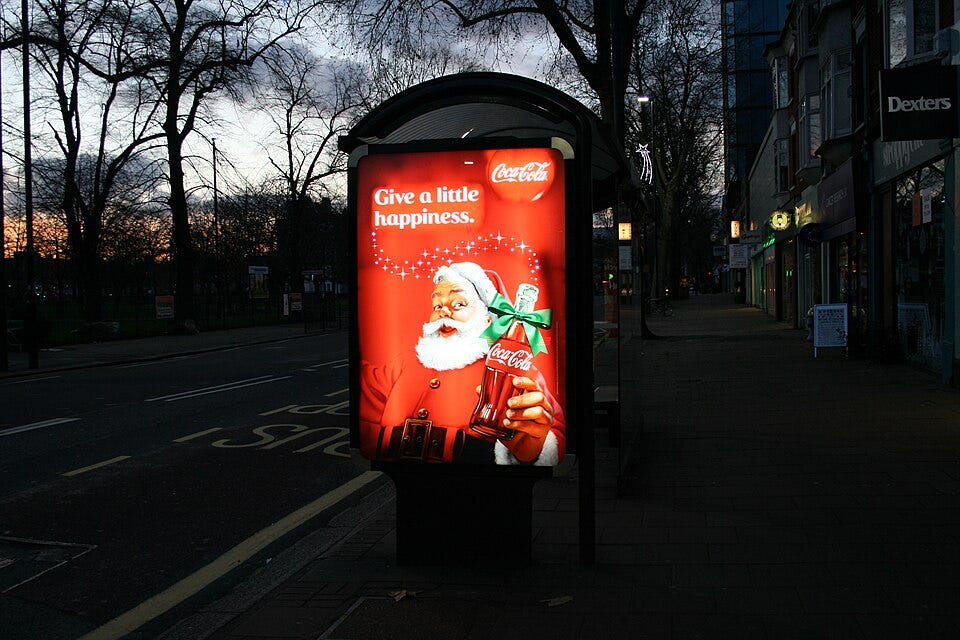
Sundblom began sketching a new version of Santa with Coke’s brand identity in mind. The Santa he developed appeared fuller, older, more approachable, and dressed in a red and white outfit that aligned neatly with the brand. This depiction also differed from many earlier portrayals of Santa, which had varied widely in appearance and style.
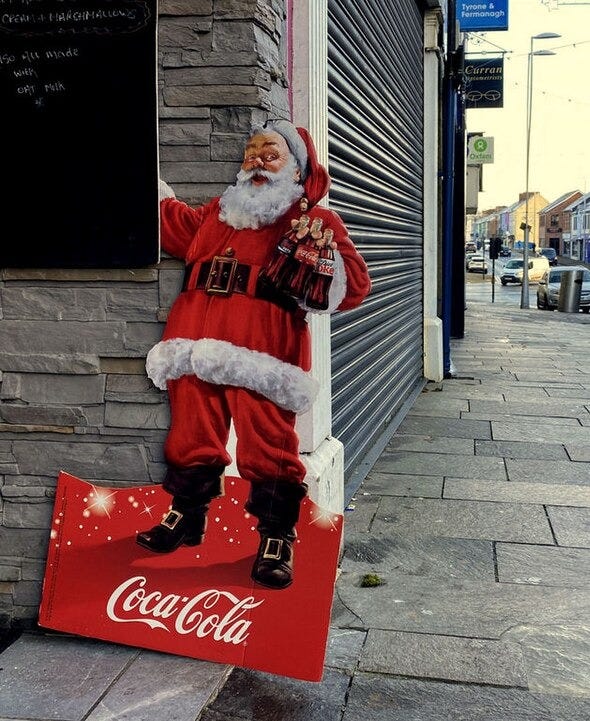

Sundblom’s Santa first appeared in Coca-Cola advertising in 1931, debuting in publications such as The Saturday Evening Post. From there, the same Santa began showing up regularly across major magazines including Ladies’ Home Journal, National Geographic, and The New Yorker, giving the image wide and repeated exposure.
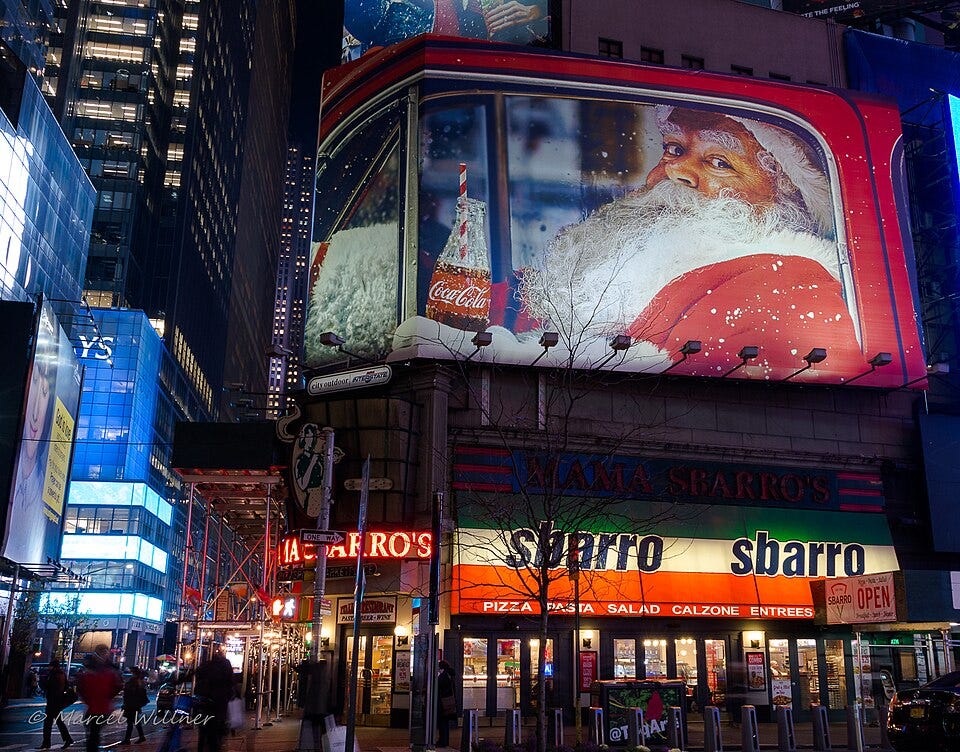
Over the years, Coca-Cola’s holiday advertising showed Santa in familiar, domestic scenes, such as delivering toys, pausing to read letters, interacting with children, and helping himself to a bottle of Coke from the refrigerator. In addition to magazine ads, the original oil paintings Sundblom created were adapted across store displays, billboards, posters, calendars, and later even collectibles like plush figures. These images continued to circulate well beyond their initial publication, remaining in use through the 1930s and 1940s and eventually spreading internationally as Coke expanded its global presence.
Sundblom completed his final Santa painting for Coca-Cola in 1964, but for decades afterward, the brand continued to use visuals based on his original work. Many of these paintings became part of the company’s permanent archive and were later exhibited in museums and public spaces around the world, helping the image stay visible and familiar over time. As a result, Coke’s version of Santa became easier to recall than others, simply because it was the one people encountered most often.
.jpeg)
What made the campaign click was the sheer variety of places people saw Coca-Cola’s version of Santa. He wasn’t limited to one type of ad, and people saw him repeatedly. Plus, the red and white Santa aligned perfectly with the brand’s colours, making the connection feel natural.
In terms of business impact, this campaign didn’t just solve a seasonal slump; it changed how people thought about Coca-Cola. Previously seen as a refreshing summer beverage, Coke became something people considered year round. By placing Santa in cozy, everyday scenes (like grabbing a Coke from the fridge or enjoying a bottle after delivering gifts), the ads helped change the perception of the drink, making it feel at home in holiday traditions. Children saw Santa enjoying it, while adults absorbed the idea that the drink belonged at Christmas.
As a result, Coca-Cola saw substantial business growth over time. While it’s hard to attribute all of their success to one campaign, historical reports indicate that the brand’s earnings grew significantly in the following decades, highlighting how effective this approach proved to be. Over three decades of running these ads, Coca-Cola transformed not just their winter sales but their overall brand image.

What followed was a long running relationship with Christmas that Coca-Cola continued to build over time. Decades after the original Santa campaign, the brand remained deeply invested in holiday advertising that felt familiar and emotionally rooted. One of the clearest examples of this came in 1995 with the launch of Coca-Cola’s Holidays Are Coming campaign.
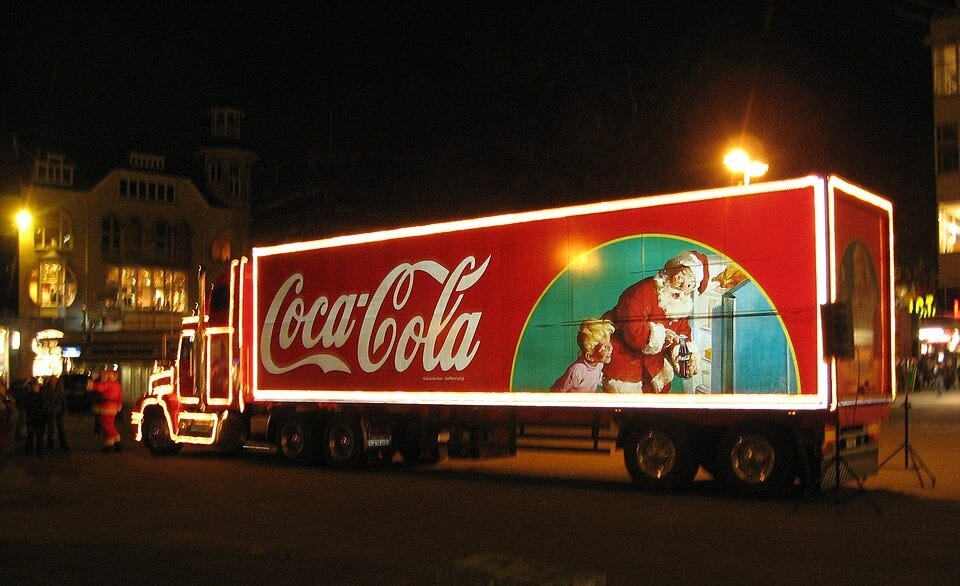
The ad introduced the now famous Coca-Cola Christmas trucks, glowing with lights as they moved through winter landscapes, set to an upbeat and instantly recognizable tune. Over time, the trucks themselves became a seasonal marker of sorts. In many places, their first appearance each year came to signal that Christmas had arrived. According to Project Aeon, 44% of British consumers actually associate the ad with the official start of their holiday period.
Rather than shifting direction, Coke treated these later campaigns as extensions of an established holiday presence. The brand returned to the same themes year after year, focusing on moments of happiness, togetherness, optimism, and familiarity. Visually, it also maintained a high level of consistency, avoiding major logo changes and creating a sense of continuity across generations.
At the same time, however, Coca-Cola has shown a willingness to adapt without breaking that continuity. Recent Christmas campaigns have explored new formats and technologies, including the use of AI, while keeping the emotional tone intact. Regional variations allow the ads to reflect local customs, but the underlying message remains the same. In doing so, the brand has managed to stay relevant to new audiences without abandoning what made its holiday advertising work in the first place.

Linking Santa Claus to Coca-Cola was not an obvious move for a brand built around an ice cold drink, especially during cold, snowy winter months when people weren’t naturally reaching for soda. From early on, however, Coca-Cola chose to associate its brand with feelings of togetherness and shared emotional moments rather than the product itself. Over time, its Christmas advertising influenced not only how the brand is perceived during the holidays, but also how Santa came to be visually remembered by many viewers.
These campaigns have lasted because they feel familiar. Elements like Santa and the Christmas trucks return year after year, while the way the stories are told continues to evolve. That balance still resonates today; Coca-Cola’s Christmas commercials consistently perform far better than most advertising, earning close to a 5.9-star rating in industry testing, compared to an average of around 3 stars for typical ads.
Coca-Cola did not invent Santa’s red suit or create Christmas traditions from scratch, but through decades of consistent holiday advertising, the brand became part of how Christmas is visually and emotionally remembered. What began as a response to slow winter sales grew into one of the most enduring presences in holiday marketing.
Sources: The Coca-Cola Company, National Museum of American History, Branding Strategy Insider, Supadu, Beans Marketing, Times of India, Museum of Healthcare, Phable.io, Storimake, Digital Toppers, Project-aeon, and The Chartered Institute of Trade Mark Attorneys.
Just a head’s up: This isn’t financial advice; all views here are personal.
So proud of you Taannyaa ❤️ Such a fun, smart read... I loved how you explained the why behind the Coca-Cola Santa story, not just the history. It’s amazing how one campaign ended up shaping how we all picture Christmas. You make business and culture feel so easy and enjoyable to read. Keep going, this is classic Finitial...
Wild that Santa looked so different before Coke stepped in!